
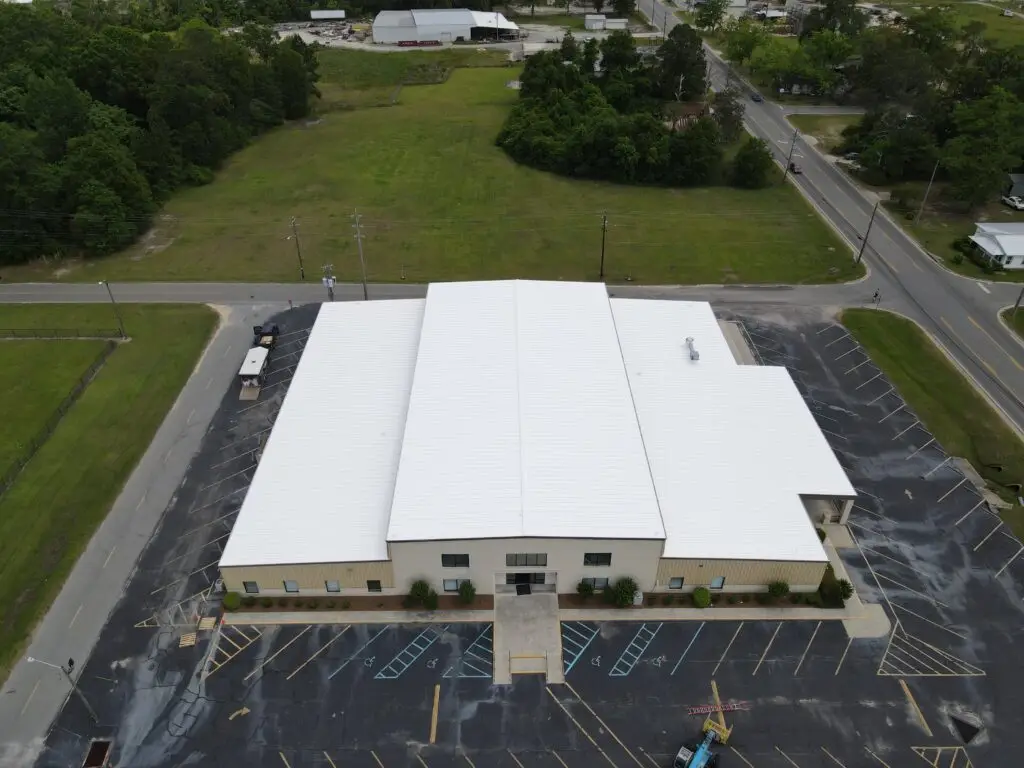
Georgia summers push your building and your budget to their limits. If your roof traps heat, your HVAC works harder, interior comfort drops, and energy spending climbs. Investing in energy-efficient systems and TPO roofing in Georgia flips that equation by reflecting sunlight, resisting UV damage, and easing the thermal load on mechanical equipment.
This guide breaks down high-performing options for hot, humid climates, explains how they reduce heat gain, and offers guidance on choosing the right system for your commercial property.
What Energy-Efficient Roofing Means in Georgia
Energy-efficient or cool roofing uses reflective surfaces and thermal properties to reduce heat transfer into the building. According to the U.S. Department of Energy, cool roof materials rely on two core performance metrics:
- Solar Reflectance: The fraction of solar energy reflected away from the roof surface.
- Thermal Emittance: The ability of a surface to shed absorbed heat.
High-reflectance, high-emittance roofs stay cooler under intense sun. In Middle and South Georgia, white single-ply membranes and reflective coatings reflect sunlight, reducing rooftop surface temperatures by up to 50 degrees Fahrenheit compared to dark materials.
White TPO and PVC Membranes for New Installs and Re-Roofs
Single-ply membranes like TPO (Thermoplastic Polyolefin) and PVC are proven choices for low-slope commercial roofs. Choosing experienced installers for TPO roofing in Georgia ensures your membrane handles high humidity and thermal movement.
Key Benefits
- High Reflectivity: Bright white surfaces reflect solar radiation, minimizing heat gain.
- UV Resistance: Advanced polymer compounds prevent premature degradation under constant sun exposure.
- Watertight Seams: Hot-air welded seams create a continuous barrier against heavy rain.
Ideal Use Cases
TPO and PVC systems are ideal for new construction, full roof replacements, or recovery projects where existing insulation remains sound. They are widely used across shopping centers, medical offices, warehouses, and industrial facilities.
Expected Service Life
The life expectancy of a TPO roof ranges from 20 to 30 years, depending on membrane thickness, installation quality, drainage efficiency, and maintenance. To compare single-ply options for your facility, review our guide to single-ply roofing options.
Reflective Roof Coatings for Restorations
When an existing roof is structurally sound but weathered, a coating-based restoration adds reflectivity and extends service life without requiring a full tear-off. Three primary chemistry families are used in Georgia:
Acrylic Coatings
- Properties: Water-based, highly reflective, and economical.
- Best For: Metal roofs and sloped single-ply systems where standing water is not a persistent issue.
Polyurethane Coatings
- Properties: Exceptional tensile strength, impact resistance, and strong adhesion.
- Best For: High-wear areas, roof traffic paths, or as a durable base layer under reflective topcoats.
Silicone Coatings
- Properties: Superior UV stability, permanent flexibility, and resistance to ponding water.
- Best For: Flat roofs with minor drainage challenges and high moisture exposure.
Before selecting a coating, schedule a professional roof assessment. Learn more about restoring existing substrates on our commercial roof restoration page.
Foam Roofing with Reflective Topcoats
Spray Polyurethane Foam (SPF) adds continuous thermal insulation and creates a seamless surface that seals around penetrations. Topped with an elastomeric coating, SPF delivers both high R-value thermal resistance and solar reflectivity.
Why SPF Works in the Southeast
- Closed-Cell Structure: Limits heat conduction and air infiltration into the building envelope.
- Monolithic Protection: Eliminates seams around complex HVAC curbs and roof penetrations.
- Custom Sloping: Helps correct flat areas to improve drainage.
With periodic recoating every 10 to 15 years, SPF provides long-term energy savings. Explore our foam roofing services to evaluate thermal performance for your building.
How Cool Roofs Reduce HVAC Load and Operating Costs
Commercial roofs in Georgia can reach temperatures exceeding 150 degrees Fahrenheit during peak summer months. Installing reflective membranes or coatings lowers deck temperatures and delivers clear operational advantages:
- Lower Heat Transfer: Less heat enters the plenum, keeping interior spaces cooler.
- Reduced Peak Demand: Decreases strain on HVAC compressors during the hottest hours of the day.
- Extended Equipment Life: Less wear on cooling infrastructure means fewer emergency repairs and replacements.
The exact rating and benefits of reflective materials can be verified through the Cool Roof Rating Council.
Choosing Between Full Installation and Roof Restoration
| Scenario | Recommended Solution | Primary Advantage |
|---|---|---|
| The membrane is severely degraded, saturated, or aged out | TPO / PVC Replacement | Clean slate, new insulation, long manufacturer warranty |
| Deck and insulation are sound; surface is weathered | Reflective Coating Restoration | Lower upfront capital, no business disruption, tax benefits |
| Building requires added insulation and a custom slope | SPF Foam + Reflective Topcoat | High R-value, seamless waterproofing around penetrations |
Seasonal Prep Before Peak Heat and Storm Seasons
Get ahead of severe summer conditions with this maintenance checklist:
- Clear all scuppers, gutters, and interior drains to ensure fast water evacuation.
- Inspect flashings, pipe boots, and field seams for gaps or lifting.
- Clean reflective surfaces to remove accumulated dirt, soot, and pollen that impair reflectivity.
- Check for soft insulation spots that indicate trapped moisture.
- Verify that rooftop HVAC equipment supports and curb flashing are watertight.
If your facility is located in Warner Robins or surrounding Middle Georgia communities, scheduling a proactive roof evaluation helps prevent sudden storm leaks.
Frequently Asked Questions
What makes TPO roofing in Georgia energy efficient?
TPO membranes feature reflective surface formulations that bounce solar radiation away from the building, preventing heat buildup and reducing cooling demands on your HVAC system.
Does an acrylic roof coating withstand standing water?
Acrylic coatings perform well on sloped systems with good drainage. For flat roofs with persistent ponding water, a silicone coating system is generally recommended.
What is the average lifespan of a TPO roof?
A professionally installed TPO roof typically lasts between 20 and 30 years with routine maintenance and regular inspections.
Partner with Georgia Commercial Roofing Experts
Cool roofing is one of the most effective ways to combat extreme heat while controlling commercial utility expenses. Whether you need white TPO single-ply installation, a fluid-applied coating restoration, or seamless foam roofing, selecting the right approach starts with an on-roof evaluation.
Contact Olde South Contractors today at (478) 251-2037 or request a commercial roof consultation to evaluate your roof and discuss energy-saving options.