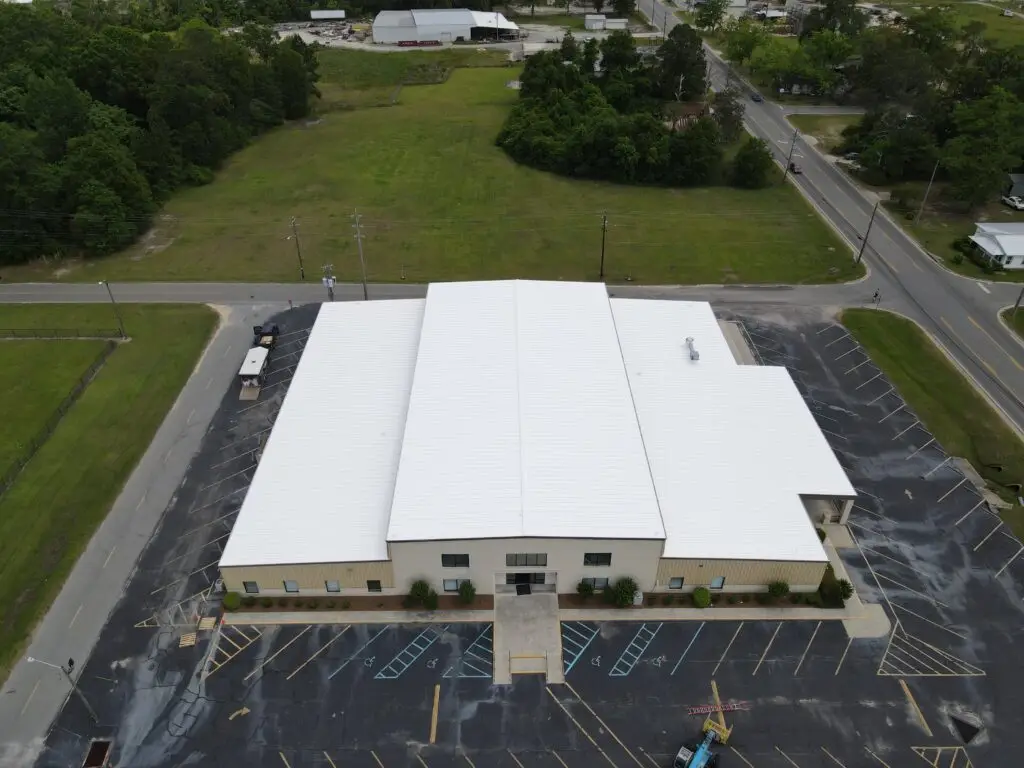
Replacing a roof while tenants are serving customers is a high-stakes juggling act. You need watertight results, clear communication, and a plan that keeps doors open.
At Olde South Contractors, we build TPO commercial roofing projects around operations first. That means phasing work areas, scheduling during favorable weather windows, and coordinating with managers so crews stay out of the way, and the site stays safe and compliant.
This guide walks through how we deliver TPO commercial roofing installations in occupied buildings, what to expect with metal recoveries, skylight and drain details, insulation choices, Mule-Hide warranty paths, and a sample two-week timeline for a retail strip.
How we phase, protect, and minimize disruption
- Phasing and access control: We divide the roof into zones, isolate each zone with temporary protections, and sequence work so customer entrances and critical operations remain clear. Deliveries and dumpster swaps are planned for off-peak times.
- Safety and compliance: Safety is built into every phase through site coordination, supervision, and adherence to industry standards. We align our plan with property rules, secure work areas, and maintain tight communication with managers.
- Odor and noise control: TPO systems are heat-welded, which limits solvent odors. We schedule higher-noise steps during slower periods and use buffer zones around sensitive interiors, such as clinics or offices.
- Debris management: Tear-off, scrap, and fasteners are contained, staged, and removed daily. Protective coverings and magnetic sweeps keep parking and sidewalks clean.
- Weather-window scheduling: We track forecasts and advance only when conditions support clean, dry welds. When rain threatens, we pause at natural breaks and button up each phase to keep the building dry.
Recovering over metal roofs the right way
Many occupied facilities choose a recover over standing seam or R-panel metal to avoid full tear-off downtime. A typical approach:
- Verify structure and fastener pull-out values, repair compromised decking, and address rust with cleaning and appropriate primers.
- Install flute fill to create a flatter surface between ribs.
- Add an insulation layer suited to the performance and warranty path.
- Mechanically attach or adhere the TPO membrane and flash details.
Recovery reduces disruption and can improve energy performance, but not every metal roof qualifies. Saturation, structural issues, or trapped moisture may require targeted removal before the recover proceeds.
Skylights, drains, and parapets
Occupied buildings often have layers of details that drive schedule and workflow.
- Skylights: We can remove obsolete or cracked units, infill the openings, and install insulation and deck patches. Where skylights remain, new curbs, welded flashing, and pitch pans or boots are detailed to manufacturer specs.
- Roof drains: We rework strainers, clamping rings, and sumps so water moves off the roof. On parapet-only systems, edge metals and scuppers are rebuilt to manage flow and reduce the risk of ponding.
- Parapet walls: We replace failing base and counterflashing, extend the insulation, and install secure, watertight terminations before the final coping or edge metal is installed.
Insulation options that fit your facility
The right insulation package supports drainage, energy goals, and warranty requirements.
- Fan fold: A light overlay that smooths minor irregularities and speeds recover work.
- Flute fill: Rigid boards installed between metal ribs to create a flat plane before the overlay.
- Tapered insulation: Sloped boards that build positive drainage toward drains or scuppers, reducing ponding and extending membrane life.
We help you balance budget, performance, and phasing. Tapered systems improve drainage but can extend lead times; fan fold accelerates timelines on qualifying decks.
Mule-Hide warranty paths
As a certified installer for Mule-Hide TPO systems, we build to the required specifications for eligible warranties. Coverage length and type depend on membrane thickness, attachment method, substrate, and the details of execution. Options can include system warranties for materials and, when specified and inspected, enhanced protections. We review goals, match the system to requirements, and coordinate inspections where applicable. Terms vary by project and must meet Mule-Hide criteria.
A practical two-week retail strip timeline
Every site is different, but here is a sample sequence for a small retail center that must stay open:
- Day 1: Mobilize, set safety perimeters, confirm access routes, and stage materials away from customer entries.
- Day 2: Prep first roof zone, remove obsolete skylights, and complete deck repairs.
- Day 3: Install flute fill over metal; begin fan-fold or the first insulation layer.
- Day 4: Continue insulation; set tapered crickets toward drains or scuppers as designed.
- Day 5: Install TPO in Zone 1 with perimeter and curb flashing; seal the day’s edges.
- Day 6: Shift staging; prep Zone 2 while Zone 1 punch list is addressed.
- Day 7: Insulation and TPO in Zone 2; rework drains, scuppers, and terminations.
- Day 8: Parapet and edge metal detailing; coordinate any tenant-specific penetrations.
- Day 9: Complete remaining zones; daily cleanup, magnetic sweep, and haul-off.
- Day 10: Final seams, curb flashings, and walk pads near service paths.
- Day 11: Quality control pass; address minor punch items.
- Day 12: Manufacturer inspection if required by the selected warranty.
- Day 13: Closeout documentation, photos, and owner walk-through.
- Day 14: Demobilize, final cleanup, and handoff.
The weather can compress or extend this plan. The constant is phasing work, so each day ends watertight.
Common TPO issues and how we prevent them
Most problems trace back to poor design or installation rather than the material itself.
- Weak seams from rushed welding or contaminated laps
- Inadequate drainage that leads to ponding and premature wear
- Loose terminations and flashing at parapets, curbs, and penetrations
- Punctures from foot traffic or equipment service without protection
- Aging surfaces that need maintenance around units and edges
Our approach emphasizes substrate repair, correct insulation design, consistent weld quality, protected walk paths, and scheduled maintenance.
Choosing membrane thickness
When evaluating TPO commercial roofing, is 60-mil TPO better than 80-mil TPO? Thicker membranes typically offer higher puncture resistance and can support longer warranty paths when installed to spec. Many occupied facilities select 60 mil for value and performance; others choose 80 mil for added durability or high-traffic roofs. We help weigh cost, traffic patterns, and warranty goals before deciding.
FAQ
- How many days does it take to install a TPO roof?
Timelines vary by size and complexity. A modest retail strip often finishes in roughly two weeks, while larger facilities can take longer. Weather and insulation packages influence pace.
- What are common problems with TPO roofing?
Improperly welded seams, poor drainage, weak terminations, and punctures from traffic are typical. Quality installation and routine maintenance minimize these issues.
- Is 60 mil TPO better than 80 mil TPO?
Neither is universally better. 80 mil usually offers more durability and may support longer warranties. 60 mil balances cost and performance for many properties.
- How long should TPO last?
With proper design, installation, and maintenance, TPO typically lasts 20 to 30 years.
When a full tear-off makes sense
If testing finds saturated insulation, severe rust, or failing decking, selective or full removal is recommended to protect long-term performance. We isolate tear-off areas, complete same-day dry-in, and keep the rest of the building operating as usual.
The Olde South approach
From take-off to final inspection, we plan around your operating hours, coordinate with managers, and maintain clear communication so tenants can continue serving customers. If you are comparing a roof recover over metal, tapered insulation, or warranty goals, we can evaluate options and map a clear schedule.
If you want to learn more about single-ply roofing options, explore our overview. For owners weighing reflective membranes and recovery strategies, see our TPO commercial roofing page. If metal restoration or replacement is on the table for other buildings in your portfolio, our commercial metal roofing guidance can help.
- Single-ply overview: https://oldesouthcontractors.com/roof-services/single-ply-roofing/
- TPO services: https://oldesouthcontractors.com/roof-services/tpo-roofing/
- Commercial metal solutions: https://oldesouthcontractors.com/roof-services/metal-roofing/
Summary
A successful TPO commercial roofing project in an occupied building hinges on phasing, drainage-forward design, disciplined safety management, and weather-aware scheduling. Whether you need a roof recover over metal with flute fill and fan fold, tapered insulation for drainage, or a Mule-Hide warranty path, we build the plan around your operations. Contact Olde South Contractors LLC at 478-251-2037 or schedule an inspection online to create a project plan that keeps your business open.